


Unlock Your Curls: Hair Type & Texture Guide
- Luxurious Black Girl Vibes LLC
- Oct 12, 2025
- 5 min read
Updated: Oct 12, 2025
We all know the struggle. Staring in the mirror, wondering why your curls sometimes cooperate and sometimes…well, they just don't. Decoding your curl pattern and hair texture is the first step to achieving the healthy, vibrant, and defined curls you’ve always dreamed of. This isn't just about aesthetics; it's about understanding your hair's unique needs and giving it the care it deserves. Let’s embark on this journey to understanding your curl pattern and hair texture, unlocking the secrets to a flourishing head of curls. We’ll delve into identifying your hair type, understanding its specific needs, and building a routine that celebrates your unique beauty.
Understanding Your Curl Pattern and Hair Texture Guide
Knowing the basics of hair typing is essential. This will allow you to select the right products and techniques, significantly improving your hair’s health and appearance. Let’s break down the categories.
The Hair Types System
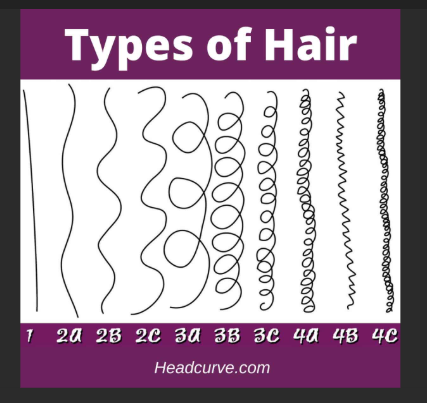
The most common system categorizes hair into four main types: Type 1 (straight), Type 2 (wavy), Type 3 (curly), and Type 4 (coily). Each type is further divided into subtypes (a, b, and c) based on the tightness of the curl or wave. The Curl Pattern and Hair Texture Guide system isn't a rigid rule, it's simply a starting point.
Type 1: Straight Hair
Straight hair has no natural curl. People of color often don't associate with this category as frequently, but hair can be straightened so understanding type 1 hair is important. Type 1 hair tends to be oily because the scalp's natural oils easily travel down the hair shaft.
Type 2: Wavy Hair
Wavy hair has a slight bend or "S" shape. It’s not quite straight but doesn’t form defined curls.
Type 2A: Fine and thin, easily straightened.
Type 2B: Medium thickness with a more defined "S" shape, prone to frizz.
Type 2C: Thick and coarse, with defined waves that start close to the scalp. Often mistaken for curly hair.
Type 3: Curly Hair
Curly hair features defined curls and springs. The tightness of the curls varies within this category. Type 3 hair is more prone to dryness than Type 2 hair.
Type 3A: Large, loose curls with a wide diameter.
Type 3B: Medium-sized, springy curls, often with a mix of textures.
Type 3C: Tight, corkscrew curls that are packed closely together.
Type 4: Coily Hair
Coily hair is characterized by tightly packed coils, often described as "Z" shaped. This type is the most prone to dryness due to the tight curl pattern hindering oil distribution. Type 4 hair is often fragile and requires extra care.
Type 4A: Tightly coiled hair with a visible "S" pattern when stretched.
Type 4B: Hair bends in sharp angles like the letter "Z," less defined curl pattern.
Type 4C: Densely packed coils with very little curl definition, prone to shrinkage.
Beyond Curl Pattern: Understanding Hair Texture
While curl pattern describes the shape of your hair, texture refers to the thickness of each strand. Your Hair Types understanding is not complete without this piece of information. Texture impacts how well your hair holds moisture and product. Hair texture is typically categorized as fine, medium, or coarse.
Fine: Individual strands are thin and delicate, easily weighed down by heavy products.
Medium: Strands have a moderate thickness and are generally easy to manage.
Coarse: Strands are thick and strong, more resistant to damage but can be prone to dryness.
Another aspect of texture is porosity – how well your hair absorbs and retains moisture. High porosity hair absorbs moisture quickly but loses it just as fast. Low porosity hair resists moisture absorption, requiring heat to open the cuticle. Medium porosity hair is balanced and retains moisture well.
Assessing Your Hair: A Step-by-Step Guide
Determining your hair type and texture requires careful observation. It's best to analyze your hair when it’s clean and product-free, as products can alter its natural state.
Wash your hair: Use a gentle, clarifying shampoo to remove any product buildup.
Air dry: Allow your hair to air dry completely without applying any styling products.
Observe your curl pattern: Examine the shape your hair naturally forms. Does it fall straight, wave, curl, or coil?
Assess your strand thickness: Take a single strand of hair and compare it to a piece of thread. Is it thinner, the same thickness, or thicker?
Check your porosity: Spritz a small section of your hair with water. Does the water absorb quickly, bead up on the surface, or take a while to absorb?
Building a Hair Care Routine for Your Hair Type
Once you've identified your hair type and texture, you can tailor your hair care routine to meet its specific needs. Remember, consistency is key to achieving healthy, thriving curls.
Cleansing
Use a sulfate-free shampoo to avoid stripping your hair of its natural oils. The frequency of washing depends on your hair type and lifestyle. Type 4 hair might only need to be washed once a week or even less frequently.
Conditioning
Deep conditioning is essential, especially for curly and coily hair. Use a moisturizing conditioner after every wash and a deep conditioner at least once a week. Look for products with ingredients like shea butter, coconut oil, and avocado oil.
Styling
Choose styling products that are designed for your hair type and texture. Lightweight products are best for fine hair, while thicker products are suitable for coarse hair. Experiment with different techniques, such as finger coiling, twisting, or braiding, to enhance your curl definition. Consider trying the LOC (Liquid, Oil, Cream) or LCO (Liquid, Cream, Oil) method to maximize moisture retention.
Protecting Your Hair
Protect your hair at night by sleeping on a satin pillowcase or wearing a satin bonnet. This will help to reduce friction and prevent breakage. Avoid heat styling as much as possible, and always use a heat protectant when you do.
Common Mistakes to Avoid
Many people make mistakes when caring for their curls, hindering their hair’s potential. Avoid these common pitfalls.
Over-washing: This strips your hair of its natural oils, leading to dryness and breakage.
Using harsh products: Sulfates and parabens can damage your hair and scalp.
Neglecting deep conditioning: Curly and coily hair needs regular deep conditioning to maintain moisture.
Using too much heat: Excessive heat styling can cause irreversible damage.
Ignoring your scalp: A healthy scalp is essential for healthy hair growth.
Embracing Your Unique Curls
Understanding your hair type and texture is a powerful tool. It allows you to choose products and techniques that will nourish and enhance your natural curls. But remember, beauty is subjective. Don't get caught up in rigid rules. Embrace your unique texture, experiment with different styles, and have fun with your hair. Celebrate the beauty of your natural curls!
Now that you have a solid understanding of the Curl Pattern and Hair Texture Guide, it’s time to put your knowledge into practice. Start by assessing your hair, identifying its unique characteristics, and building a hair care routine that caters to its specific needs. The journey to healthy, beautiful curls is a marathon, not a sprint. Be patient, consistent, and embrace the process. Investigate products and routines, try something new – your hair will thank you. Get started today and reveal your curl potential!


Comments